Listen first. Design second.
Not just how something looks — but how people understand it, feel about it, and act on it. I work upstream, before the brief is written, asking who needs this and why. Anthropology taught me to observe. Improv taught me to listen, stay agile, and find delight in the unexpected. The result is work that tends to both the detail and the whole — and occasionally surprises everyone, including me.
Something about how information is great. In fact, it can change lives. But there can be a gap between information and understanding. That's where I come in.
Subtitle
I've always been fascinated by other cultures—what symbols mean, what colors mean, how the visual world reflects things like history, religion, politics. In the West red symbolizes danger while in East Asia, it represents prosperity. Symbols are context-driven. Context is everything. In order not to step on your toes in a new situation, you must be curious and have an open mind. What is their visual language telling me? It requires, listening, looking, and reading between the lines to get the gist/story.
I approach design the same way. I begin upstream. Before any concepts are started, I ask questions to find out why people need this thing. Who are you trying to reach? What do they care about? What gets them out of bed in the morning? What keeps them awake at night? What gap is it filling for them?
Then I organize what I learned and look for patterns, connections. I begin the messy and reflective process of synthesizing. It can appear a waste of time because it's unpredictable but that's where faith and diligence pay off.
Then begins the iterating, trial and error.
Then I start making. Some people think by writing. I think by making. It's how i make sense of the world. It can feel like a mad scientist sometimes. Trying something, only to return to the lab the next day and see what I've done in new light, like a scientist.
But understanding isn't enough. The physical act of making is how I think. Sketching, arranging, testing, questioning, throwing things away, and trying again is how ideas become clearer. This is the creative process and it requires faith and diligence. and it's most fun for me when done in collaboration so the reward is shared.
Through that process, complexity gradually gives way to simplicity.
Capturing ideas visually adds another dimension to understanding. It can take the form of a photo, a chart, a laid out story, an improv exercise. What they have in common is a faith in the process and a willingness to stay open. To reveal teh next step. As long as you keep an open mind and spirit of experimentation, the next step will reveal itself. And then the next. Until you've arrived at something beautiful.
McDormand says: “If you look at Japanese design, you look at Scandinavian design, you look at mid-century modern, you look at early American, it’s not about decoration, it’s about utility. But because of that and because of the attention that’s given to it, it ends up being beautiful.”
My background spans logo and brand development, service design, visual storytelling, data visualization.
I've come to believe that the most important part of design happens before anything gets designed.
It starts with listening—understanding how people think, work, and make sense of the world. Anthropology taught me to observe before solving. It begins and ends with people.
I keep refining until the work feels inevitable. Beautiful, yes—but more importantly, honest. Because when something is truly understood, beauty isn't decoration. It's evidence that the solution is sound.
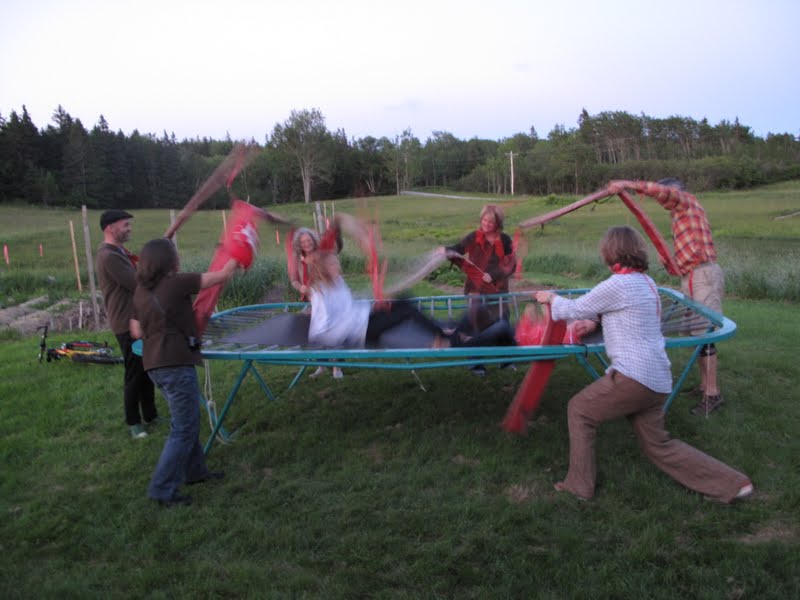
Applying rules of improvisational theater to the creative process. "Yes, and…" to the creative process. One of the most powerful rules of improv is "Yes, and." We can apply this to making. Instead of characters, our objects are the characters. Narratives are created through performance. As makers, designers can learn a lot from this.
Translate data into stories. What is the data telling us? Able to extract, translate complex concepts and data into stories that are truthful, accessible, and beautiful.
About my process. I make things to understand the world. While others think or write about it, I make about it. The physical act of making is how I think. I’m a visual thinker.
It's most fun when it's shared — built with others, in service of something larger. I'm interested in processes where many voices shape the outcome, and the result becomes more than the sum of its parts.
I'm drawn to the whole arc: listening until my assumptions fall away, shaping something honest from what I learn, and refining it until it's beautiful.
I work upstream with researchers to understand what they’re trying to do and why it matters. Informed by my background in anthropology and years of improv practice, my approach always begins with asking “who needs this, and why?” Improv has taught me to listen fully, build on what’s offered, and stay flexible when the direction shifts—skills that are especially helpful in complex systems. This methodology allows me to bring curiosity, openness, and when it serves the work, a spirit of play, to projects.